Need furnace repair help in Arlington?
- Request an estimate in a few minutes
- Compare written quotes before you decide
- Work planned around your family's schedule
- No obligation
No obligation
Arlington AC repair and HVAC help, made simple
Request your estimate today
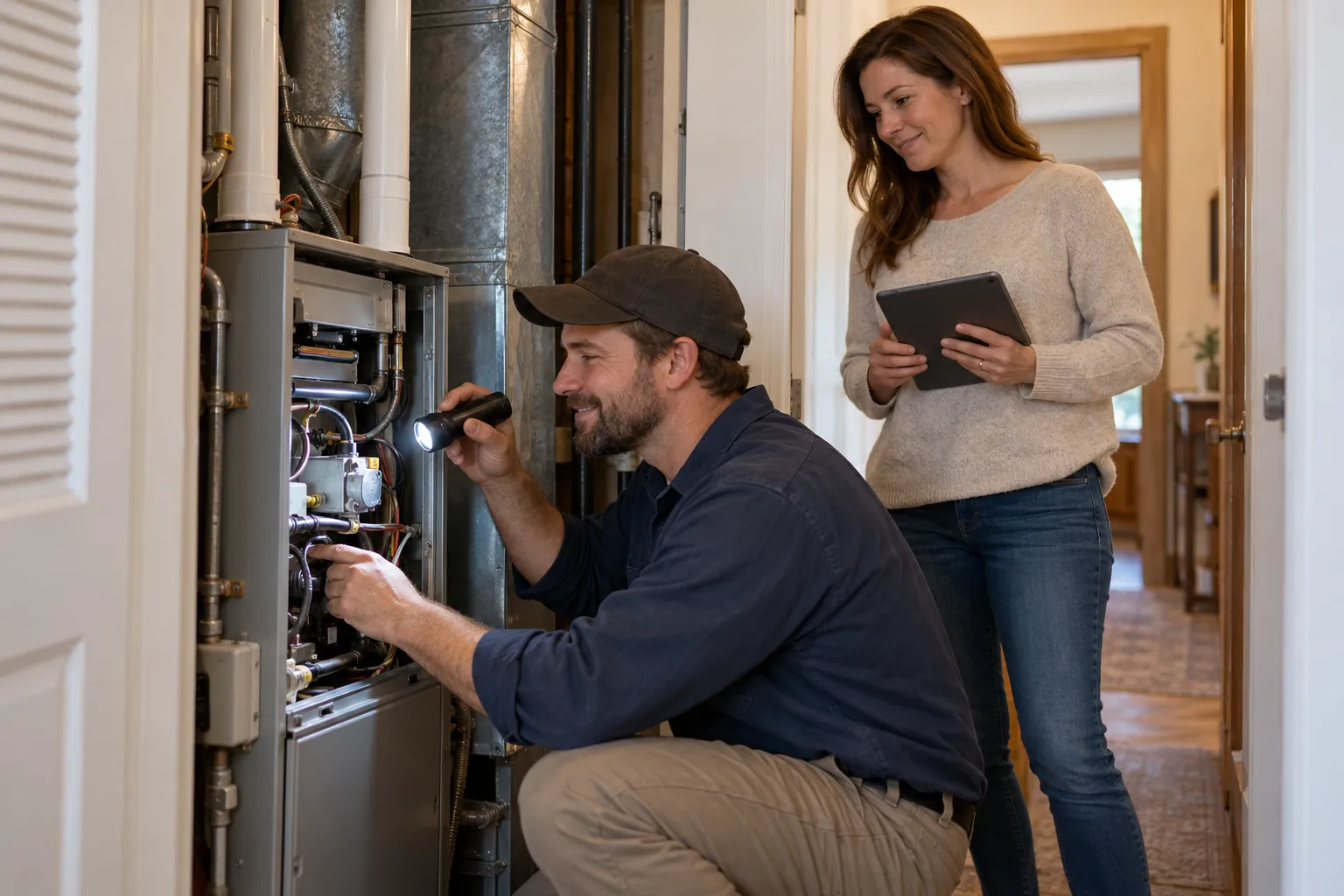
A furnace that stops working rarely picks a good moment. It might be a school morning, a work trip, or a cold snap that catches the whole street off guard. Nasasale Heating & Air is a referral service for busy households in the Arlington area. You tell us what is wrong, and we connect you with an independent local provider.
The provider does the diagnosis and the repair. Nasasale Heating & Air does not. That keeps things simple: less searching, more heat. This page covers what to do first, which checks are safe, what repairs tend to cost, and how to decide between repair and replacement. Quote before commitment is the goal, so you can plan the work around your family instead of the other way around.
If you smell gas, like rotten eggs, do not touch light switches or use a lighter. Get everyone outside, pets too. Contact your gas utility or emergency services from a safe spot away from the house. Repair questions can wait until the home is cleared.
Mild winters make it easy to forget the furnace until a cold snap arrives. Then it stops on a school morning. Nasasale Heating & Air is a referral service. You share the problem, and a provider in our network follows up with next steps. The provider does the work.
A few minutes of checking can sometimes save a service visit. Try these:
Stop if you smell anything unusual or see scorch marks.
Panels cover gas lines, wiring and moving parts. Leave them closed. Pilot lights, burners and gas valves are for licensed professionals. A small saving is not worth a real risk.
Watch for these clues:
Catching these early often keeps a small fix small.
A worn part strains the parts around it. A dirty sensor can become a failed ignitor. Waiting also tends to mean a rushed decision in a cold house, and rushed choices cost more. Early repair gives you time to compare quotes.
The provider will usually ask about symptoms, then inspect the thermostat, filter, ignition, burners, blower and safety controls. Many will test airflow and check for gas or exhaust concerns. You should hear what they found in plain words before any work starts.
The usual suspects include:
Part cost and access shape the price more than anything else.
Tell the provider your schedule when you ask for an estimate. Ask about arrival windows, how long the job should take, and whether the house will be without heat meanwhile. Many providers can respond quickly, but availability varies, so ask early.
Many local homes are slab-on-grade ranches with the furnace in a closet or a very hot attic. Attic heat wears on parts, and tight spaces can add labor time. Older pier-and-beam houses may have crawlspace ducts that need a look. Mention your home type so the quote fits.
Three things matter most: the part, the labor time, and how hard the unit is to reach. Brand and age can also affect parts. A simple filter or switch fix costs far less than a blower motor or a board. Ask for the parts and labor listed separately.
Quote before commitment. A good written quote names the problem, the part, the labor and any extra fees. Compare two if you can. Be careful with a quote that is vague or far from the others. Cheap on paper can turn costly later.
A rough guide: if the repair costs a large share of a new unit, or the furnace is past 15 years old and keeps failing, replacement may make more sense. If it is younger and the fix is small, repair usually wins. Ask the provider to show both numbers. Searching for furnace replacement near me is fine, but get the repair figure first.
Many homes here lean on cooling far more than heating. If your system is old, a provider can talk through heating and cooling together, so one decision does not cause another surprise. Keep this page's focus in mind, though: fix the heat first.
Change the filter on the schedule the maker suggests. Keep the area around the unit clear. Schedule an HVAC service check before cold weather, ideally on a quiet day, not during a rush. Small habits keep repair bills small.
Use the form to request an estimate, or Request a callback to check provider availability. Either way, no obligation, and the independent provider is the one who does the work.
A provider checks the thermostat, ignition, burners, blower and safety controls to find why the heat stopped.
Ask for the problem, parts and labor listed clearly before you agree to anything.
Worn ignitors, sensors, capacitors and motors can often be swapped without replacing the furnace.
Many providers also look at venting, filters and gas connections, so you know the furnace is running safely.
These are typical U.S. ranges. Your price depends on the part, the labor time and how hard the furnace is to reach. Always get a written quote before work begins.
| Item | Typical range | Notes |
|---|---|---|
| Diagnostic visit | $75 – $200 | Often applied toward repair at some providers |
| Thermostat repair or swap | $100 – $350 | Depends on basic or smart model |
| Ignitor or flame sensor | $150 – $450 | Common reason for no heat |
| Blower motor or capacitor | $200 – $1,000 | Motor costs more than a capacitor |
| Control board | $300 – $900 | Varies by brand and age |
| Gas valve or draft inducer | $350 – $1,200 | Harder parts with more labor |
Use the form to describe what the furnace is doing, any sounds or smells, and when you are home.
Nasasale Heating & Air refers you to an independent local provider in the network who handles furnace issues.
Review the written price, the parts and the timing before you decide.
Pick a visit window that suits your family, then the provider does the repair.
Share the problem once and get matched with an independent provider, instead of scrolling through pages of listings.
Request an estimate and compare written quotes before you commit to any work.
Tell providers your schedule so repairs fit around work and school.
Asking for an estimate does not commit you to hiring anyone.
Common causes include a dirty filter, a thermostat set to fan only, a failed ignitor or a tripped safety switch. Check the filter and thermostat first, then ask a provider to inspect the unit if the problem continues.
Most repairs fall between about $150 and $1,200 in the U.S., depending on the part and labor. Ask for a written quote so you can compare.
It depends on age, repair cost and how often it breaks. Ask the provider for repair and replacement numbers side by side, then decide what fits your budget.
Tell us what your system is doing and request an estimate. A provider in our network can follow up to talk through next steps.
No obligation